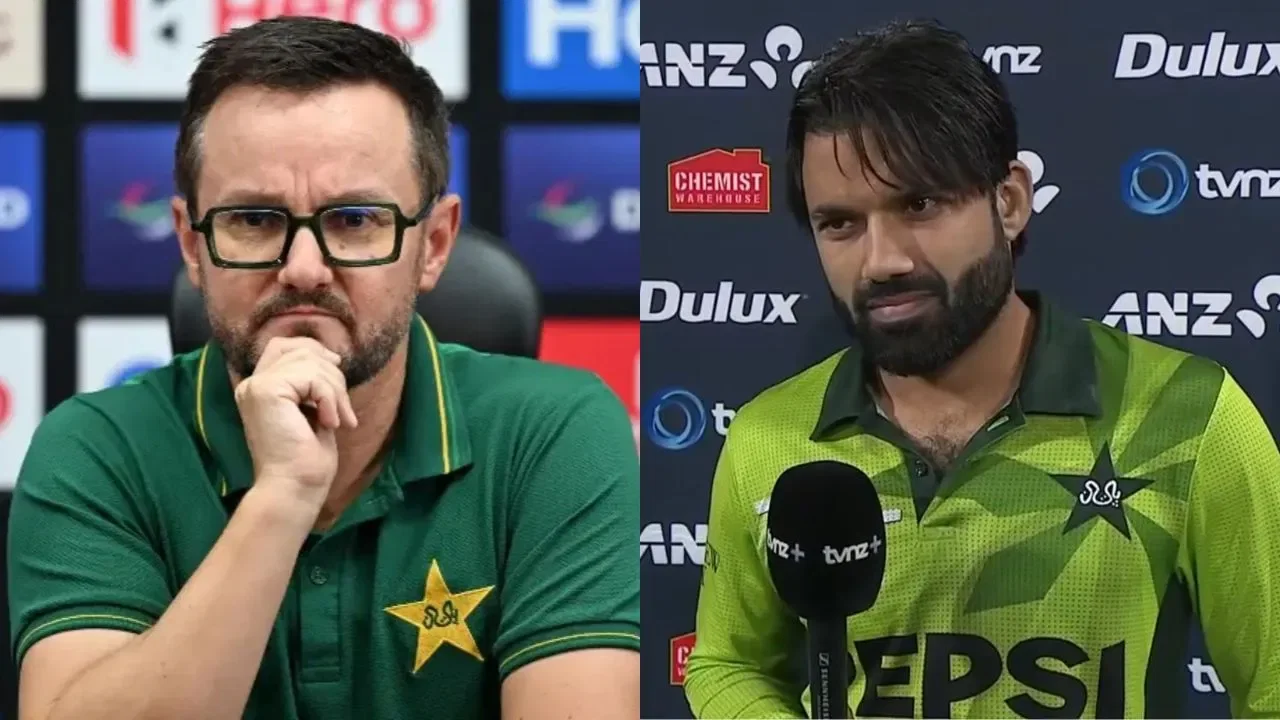
Mike Hesson breaks silence on Pakistan’s decision to drop Mohammad Rizwan from O

Understanding the Leadership Shift in Pakistan Cricket
The landscape of Pakistan cricket has undergone significant scrutiny following recent squad announcements for the upcoming three-match ODI series against Australia. Central to the ongoing debate is the exclusion of experienced wicketkeeper-batter Mohammad Rizwan and his previous removal from the ODI captaincy. Addressing the media at the Rawalpindi Cricket Stadium, head coach Mike Hesson has provided clarity on these strategic decisions.
The Rationale Behind the Captaincy Change
Mike Hesson, the current white-ball head coach, emphasized that the decision to transition away from Mohammad Rizwan’s leadership was rooted in a necessity for improved results. During his tenure, the team faced challenging phases in the 50-over format, winning only two games in a 12-month period leading up to the change. According to Hesson, the management conducted a thorough evaluation of both individual contributions and collective team dynamics.
Hesson stated, “In terms of ODIs, yes, Mohammad Rizwan started as the captain in the West Indies, and we felt we needed a change at the end of that series because we had won two games in 12 months. So, the team had not performed.” He further clarified that the move was not a personal slight against the player, but rather a calculated effort to maximize the team’s performance potential under new leadership.
Long-Term Strategy and World Cup Planning
Beyond the immediate captaincy shifts, Hesson highlighted that the current squad selection is intrinsically linked to Pakistan’s long-term roadmap for the next major ICC tournament cycle. With the World Cup approaching in approximately 18 months, the management is prioritizeing the integration of new talent and testing various player combinations.
“In terms of this series, you would have noticed in the Bangladesh One-Day series, we made a number of changes to bring in some new players, and Mohammad Rizwan was still in that squad. And coming into this series, we’ve made a couple of other changes,” Hesson explained. The goal, he noted, is to broaden the selection pool and assess the options available to the team as they build toward global success.
The Role of Salman Ali Agha
Amidst the discourse surrounding leadership, Hesson also clarified the role of Salman Ali Agha, who has been serving as the team’s vice-captain. Although there was no official public announcement, the coach confirmed that Agha has been an integral part of the leadership group for several recent tours.
“Salman Ali Agha has been the team’s vice-captain for the last five tours. I’m not aware of any new announcement in the media, but within the team, he’s always been functioning as vice-captain,” Hesson confirmed.
Looking Ahead to the Australia Series
Pakistan faces a challenging road ahead as they prepare to host Australia at the Rawalpindi Cricket Stadium. Coming off a mixed run that included a 2-1 series loss to Bangladesh, the team management is looking to rely on the experience of senior stalwarts like Babar Azam to stabilize the batting order. The upcoming matches, starting on May 30 and concluding on June 4, will serve as a crucial litmus test for the new squad configuration.
As the team transitions into this new phase, the focus remains firmly on tactical evolution. By integrating younger players while maintaining a core of seasoned professionals, Pakistan aims to rectify their recent form and build a competitive side capable of challenging top-tier nations. The transparency offered by Mike Hesson regarding these changes underscores a commitment to accountability and future-proofing the squad for the challenges that lie ahead in international cricket.