Sanjay Manjrekar’s praise for GT owners comes with direct swipe at Ambanis & MI – Sanjay Manjrekar Praises Gujarat Titans Ownership Model Amidst Subtle Dig at Mumbai Indians

A New Standard in IPL Management
The landscape of the Indian Premier League (IPL) is as much about the boardroom dynamics as it is about the action on the pitch. Recently, former Indian batter and respected commentator Sanjay Manjrekar drew a sharp distinction between the management styles of two prominent franchises: the Gujarat Titans (GT) and the Mumbai Indians (MI). By praising the ‘hands-off’ approach of the Gujarat Titans’ owners, Manjrekar sparked a conversation regarding the influence of ownership visibility on team performance.
Since their inception in 2022, the Gujarat Titans have been a model of consistency. In five seasons, the franchise has reached the playoffs four times—an astonishing record for a relatively new team. Their success is not merely accidental; it is rooted in a culture that prioritizes cricketing expertise over ownership spectacle.
The Gujarat Titans Formula: Stability and Professionalism
Manjrekar pointed out that the success of the Titans is largely due to their ability to remain out of the public eye. Instead of the owners hovering over the players or dominating the media cycle, the franchise has entrusted key operations to professionals. Vikram Solanki, serving as the Director of Cricket, brings a blend of international experience and a corporate mindset that has clearly paid dividends.
“It is actually a remarkable story because it is a new franchise, and it is not a franchise where you see the owners sitting on the sofas; they are not in your face as such,” Manjrekar noted in an interview with Sportstar. He further emphasized the role of Head Coach Ashish Nehra, who has remained a constant figure of stability, guiding the team through various challenges, including the recent ownership transition from CVC Capital to the Torrent Group.
Contrasting Styles: The Ambani Influence
Manjrekar’s comments were widely interpreted as a subtle, yet direct, critique of the Mumbai Indians’ ownership—specifically the mother-son duo of Nita and Akash Ambani. During the 2026 IPL season, the presence of the Ambanis on specialized sofas near the boundary ropes became a focal point for fans and critics alike. This level of visibility stands in stark contrast to the quiet, board-room-focused approach preferred by the Gujarat Titans.
The discussion surrounding ownership presence is particularly sensitive given the BCCI’s previous regulations intended to limit direct interaction between team owners and players during live matches. For critics, the “sofa culture” symbolizes a level of interference that can disrupt the team’s professional rhythm, whereas the Gujarat Titans have allowed their cricket experts to steer the ship without public scrutiny.
Consistency on the Pitch
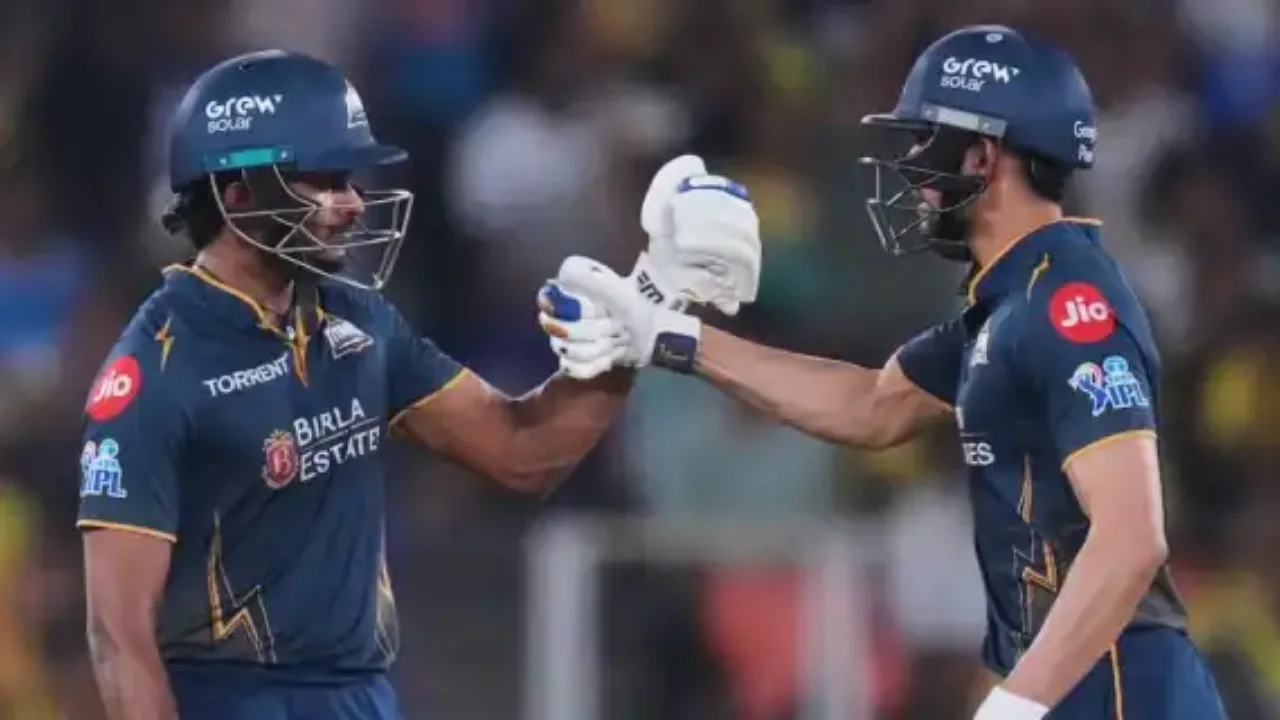
The Titans’ performance in IPL 2026 serves as the strongest evidence for their management philosophy. After a turbulent first half of the season, the team found their rhythm, stringing together a five-match winning streak to secure second place on the points table. Their success has been anchored by the opening pair of Shubman Gill and Sai Sudharsan, supported by the clinical batting of Jos Buttler. Furthermore, the bowling attack, spearheaded by Kagiso Rabada and Jason Holder, has provided the necessary balance, while Rashid Khan continues to prove his worth as an elite spin option.
The Road Ahead
As the tournament heads into its climax, the Gujarat Titans are set for a high-stakes clash in the Qualifier 1 against the table-toppers, Royal Challengers Bengaluru. The winner of this encounter will earn a direct ticket to the final in Ahmedabad on May 31. Regardless of the outcome, the Gujarat Titans have already cemented their reputation as a franchise that understands the value of quiet efficiency, proving that sometimes, the best management is the kind that stays out of the spotlight.
As cricket fans look toward the final stages of the 2026 season, the debate on whether “hands-on” or “hands-off” ownership works best will likely continue, but for now, the Titans have certainly made their case for the latter.