Tickner five-for wraps up innings win for New Zealand – Blair Tickner Leads New Zealand to Dominant Innings Victory Over Ireland

A Commanding Performance in Belfast
New Zealand secured a resounding victory over Ireland in their recent Test encounter, proving their clinical edge by winning by an innings and 79 runs. The match, characterized by intense bowling spells and key batting contributions, saw the Black Caps maintain dominance throughout, ultimately sealing the result well ahead of schedule.
The Match Situation and Initial Struggles
Ireland began the third day of the Test match in a precarious position. Starting on 65 for 2 and following on, they faced a daunting deficit of 246 runs. While temperatures in Belfast finally offered some relief from a recent heatwave, the conditions on the field remained challenging. Rain interrupted play early in the day, but not before New Zealand had successfully reduced Ireland to 131 for 5.
Nathan Smith, building on his stellar performance of six wickets in the first innings, struck early by removing nightwatcher Thomas Mayes. A masterful inswinger forced an edge to second slip, setting the tone for the morning session. At the other end, opener Stephen Doheny demonstrated grit against the swing, but the pressure applied by the Kiwi bowlers proved difficult to sustain.
The Short-Ball Strategy and Injury Setbacks
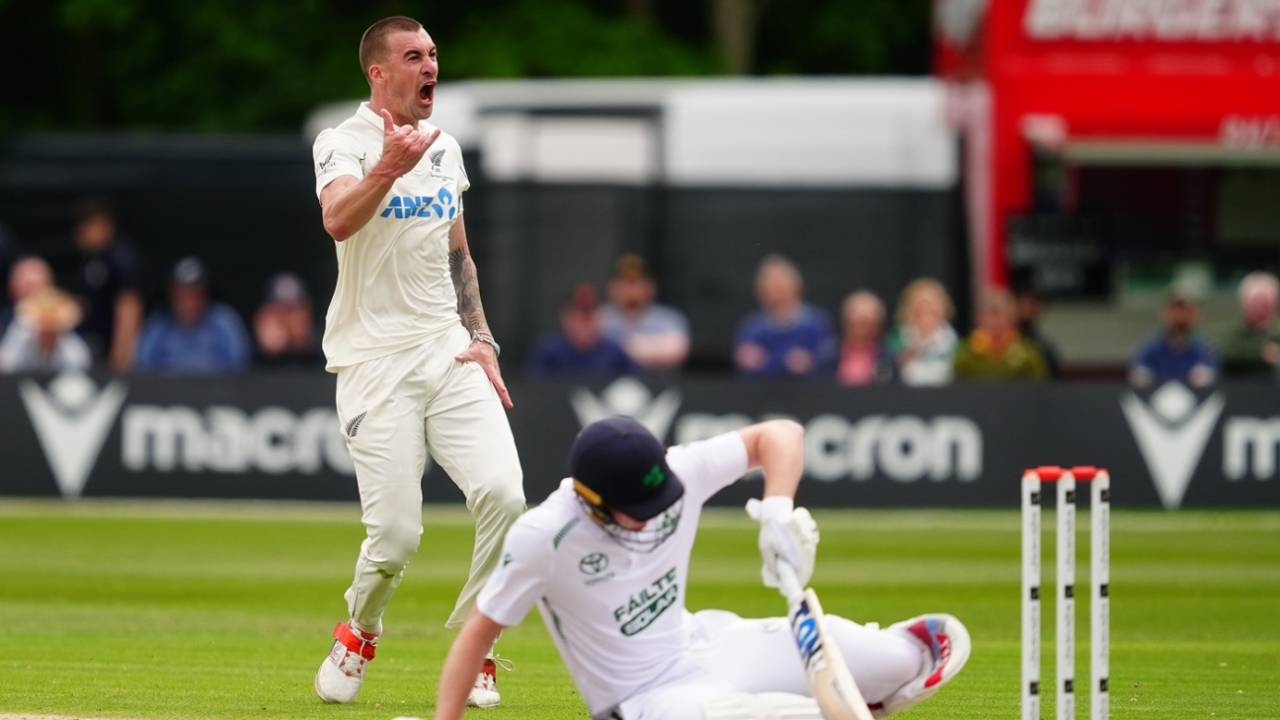
New Zealand employed a disciplined short-ball strategy, which proved to be the undoing of several Irish batters. Blair Tickner was the primary beneficiary of this tactical approach. In the 26th over, Tickner angled a sharp bouncer into Harry Tector, who ducked into the ball; the delivery struck the handle of the bat and ballooned to second slip.
The physical toll of the match was significant for the Irish side. Curtis Campher was forced to retire hurt after a bouncer struck his left hand, requiring scans and leaving Ireland a batter down for the remainder of the innings. Stephen Doheny, who had been a pillar of resistance, became the third consecutive batter to fall to a short delivery, edging a Tickner snorter to gully shortly before the lunch break.
Tucker and Adair Offer Resistance
Following the lunch interval, conditions improved as the clouds parted and the swing of the Dukes ball diminished. Lorcan Tucker capitalized on the opportunity, playing with freedom and elegance. He managed to drive effectively outside the off-stump and negotiate the short-pitched deliveries, bringing up a well-deserved half-century off just 69 balls. However, his dismissal immediately following his fifty—a miscued hook shot caught by Daryl Mitchell—effectively ended Ireland’s hopes of a significant rearguard.
Mark Adair provided a late display of panache from the number nine position. Facing a barrage of bouncers directed at his grille, Adair shuffled toward the leg side, creating space to clear the midwicket boundary with aggressive cross-batted shots. Despite his efforts, the New Zealand bowlers adjusted their lengths, aiming for his feet and forcing him to play more cautiously. Adair finished unbeaten on 44 from 47 balls, marking the fastest innings for Ireland in the Test.
Tickner’s Milestone and Looking Ahead
The match concluded when Reuben Wilson was caught behind while attempting a shot outside the off-stump. This final wicket secured a maiden Test five-wicket haul for Blair Tickner, finishing with figures of 5 for 76. The victory was comprehensive, with New Zealand winning by an innings and 79 runs with four sessions still remaining in the match.
For New Zealand, this win serves as vital preparation as they travel to London for a high-profile three-Test series against England. Ireland, meanwhile, will look to reset as they prepare to host India at the end of June for a T20I series. This match will be remembered for the clinical application of New Zealand’s pace battery and the resilience shown by the Irish middle order under immense pressure.